Black mould is one of those problems most Londoners notice three or four months after it actually started. By the time the patch on the bedroom wall is dark enough to be obvious, the spores have been spreading through the air for weeks, and the underlying moisture problem has been doing damage you can't see. This guide will help you identify black mould early — and tell you the exact warning signs that mean DIY cleaning is no longer a safe option.
What black mould actually is (and what it isn't)
"Black mould" is the everyday name for Stachybotrys chartarum, a particular species of fungus that thrives on cellulose-rich materials when they stay wet for long periods. It's only one of dozens of moulds that grow in UK homes, but it's the most concerning for two reasons.
First, it produces mycotoxins as it grows — biological compounds linked to respiratory irritation, persistent coughs, headaches, sinus problems, and worsening of asthma. Second, by the time it's visible on a wall or ceiling, the substrate behind that surface has typically been saturated for months. Black mould isn't an early warning sign. It's late-stage evidence of a deeper problem.
The thing is, plenty of innocuous-looking mould patches are not Stachybotrys. They might be Cladosporium (green-black, common around windows), Aspergillus (yellow-green-grey, common in bathrooms), or Alternaria (dark olive, often in damp basements). All of these need treatment, but Stachybotrys specifically is the one that needs professional handling.
The 5 visual signs of black mould
Stachybotrys has a distinctive look that separates it from most other moulds. Here's what to look for.
1. Deep, slightly greenish-black colour
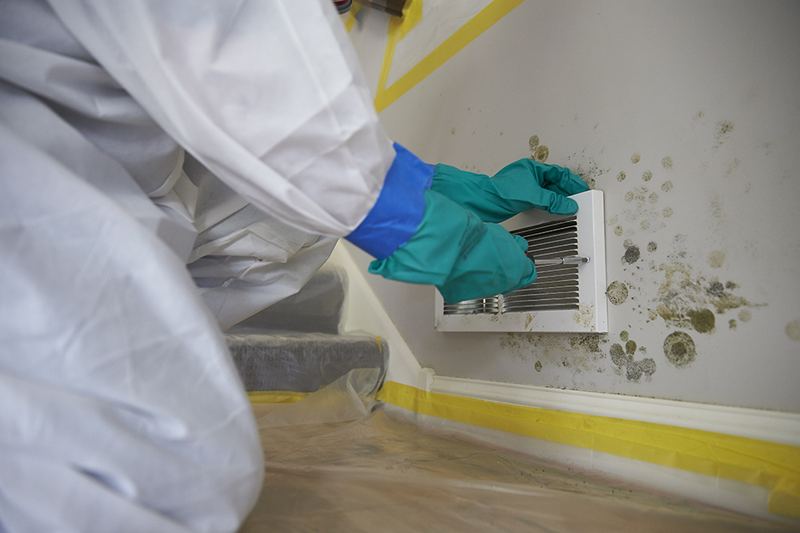
Most Stachybotrys colonies aren't truly black — they're a dark olive-black with a slight green tinge. Pure jet-black streaks running down walls are more often Aspergillus niger. The greenish edge is the giveaway.
2. Slimy or wet appearance
When Stachybotrys is actively growing, it has a slightly slimy or wet-looking texture, not powdery or fuzzy. Older, dried-out patches turn powdery and grey-black, but those have usually been there for over a year.
3. Strong musty smell
Active Stachybotrys produces a heavy, damp-basement musty smell that's noticeably stronger than typical bathroom mildew. If a bedroom or living room smells like a damp cellar, there's almost certainly Stachybotrys somewhere in the structure — often hidden behind furniture or in the wall cavity.
4. Concentrated in one area, not scattered
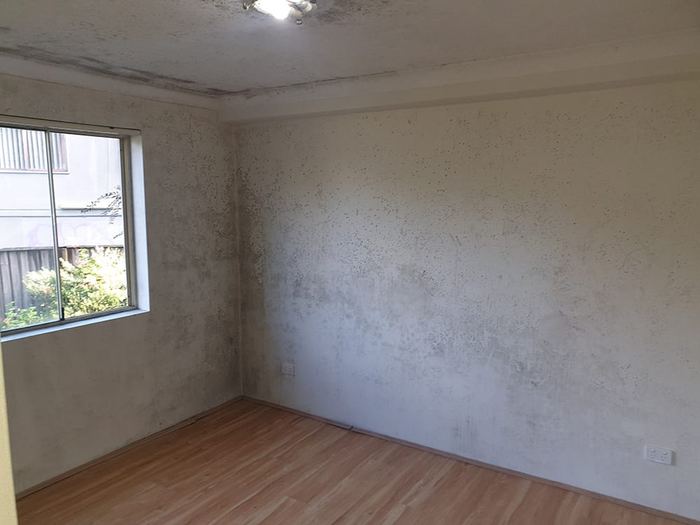
Stachybotrys colonies grow outward from a single moisture source, so you typically see one dense patch rather than scattered specks across the room. If you're seeing scattered grey-green dots on a bathroom ceiling, that's almost certainly Cladosporium or Aspergillus — easier to handle.
5. On porous surfaces, especially after a known water event
Stachybotrys needs cellulose to thrive — plasterboard, wallpaper, wood, fabric. It rarely grows on tile, glass, or metal directly. If you see a dark patch on plasterboard in a room that had a recent leak, burst pipe, or flooding event, treat it as Stachybotrys until proven otherwise.
Where black mould hides in London homes
Over six years of work across all 32 London boroughs, ZeroMould has seen Stachybotrys appear in the same hidden spots over and over again. If you suspect a problem, check these locations carefully.
- Behind built-in wardrobes on external walls. Especially in Victorian and Edwardian terraces with solid walls and no insulation. The cold wall plus the dead air pocket behind the wardrobe creates perfect conditions.
- Inside built-in cupboards under stairs. Often there's no ventilation at all, and any small water ingress from a kitchen wall or hallway pipe lets mould develop unseen.
- Behind kitchen units after slow plumbing leaks. By the time the leak is found, there's often a substantial Stachybotrys colony on the wall behind the cabinet.
- Lofts with old or damaged roof felt letting rain through. Particularly common in Victorian properties where the original felt has degraded but isn't visibly torn from inside.
- Bathroom ceilings in flat conversions where the bathroom above leaks. The downstairs ceiling soaks slowly, and Stachybotrys develops in the void before the stain shows on the plaster surface.
- Cold corners of bedrooms on north-facing external walls. Especially in mansion blocks in Westminster, Camden, and Kensington — the corner is cold-bridged and condensation pools there every winter.
- Around old chimney breasts still functioning as cold bridges. The brickwork gets cold, condensation forms on the warm plaster face, mould develops.
Health warning signs to take seriously
You don't need to see black mould to know it's affecting you. If you live in a home with known damp issues and any household member has experienced one or more of the following symptoms for more than two weeks, professional mould inspection is a sensible first step.
Persistent dry cough that worsens at home and improves when you're away
Recurring sinus infections or chronic post-nasal drip
Worsening asthma symptoms, especially at night or after waking
Unexplained headaches that improve when you leave the property
Skin rashes or eye irritation that flare up in specific rooms
Difficulty concentrating or persistent fatigue that has no other obvious cause
These symptoms aren't proof of mould exposure on their own — they overlap with many other conditions. But the "improves when away from home" pattern is the most telling. If your asthmatic child wheezes less at the grandparents' house and worsens within hours of coming back, that's a signal worth investigating.
ZeroMould provides inspections across all 32 London boroughs. Same-day appointments available. Call us before doing anything yourself.
Request an InspectionWhen DIY stops being safe
For small surface patches of non-Stachybotrys mould on non-porous surfaces (tile, glass, plastic), DIY cleaning with appropriate PPE is reasonable. But the moment any of the following applies, stop and call a professional.
The patch is larger than one square metre
Larger patches release more spores when disturbed. PPE that works for a small patch on tile won't protect you from the spore cloud released by aggressive scrubbing of a large area. A 1m² patch on plaster can release millions of spores into the air within minutes.
It's on plaster, plasterboard or wallpaper
These are porous surfaces. Surface cleaning only removes the visible part — the active mould remains in the substrate and bleeds back through within weeks. Stachybotrys on plasterboard, in particular, needs the substrate either treated with penetrating biocides or replaced entirely.
You can see it's recurring
If you've cleaned the same patch two or more times and it keeps coming back, the issue isn't the mould — it's an unresolved moisture source. Surface cleaning is futile until the source is found and fixed. A professional inspection identifies the source.
Someone in the household has a respiratory condition
Asthma, COPD, allergies, immunocompromise — these are all reasons to avoid disturbing mould yourself. Even small DIY interventions release spores. For households with vulnerable members, professional containment matters.
You suspect Stachybotrys specifically
Black mould with greenish tinge, slimy texture, on porous surface, with strong musty smell, after a known water event — that combination strongly suggests Stachybotrys. This species releases the most harmful mycotoxins when disturbed. Don't touch it. Don't scrub it. Don't paint over it. Get an inspection.
What a professional inspection actually does
If you call ZeroMould for a black mould inspection, here's what we do that you can't do yourself:
- Species identification — distinguishing Stachybotrys from Cladosporium, Aspergillus, Alternaria, and the harmless surface mildews that don't need aggressive treatment.
- Moisture mapping — using thermal imaging and humidity meters to find the water source, often hidden inside walls or above ceilings, that you'd never spot from surface inspection.
- HEPA containment — sealing the work zone so spores don't drift into other rooms during treatment. This isn't something DIY can replicate.
- Substrate-level treatment — penetrating antimicrobials that kill the mould inside the plaster, not just the surface. This is the difference between treatment that lasts and treatment that fails within a month.
- Documentation — photographs, root-cause analysis, treatment certificate. Useful for insurance claims, for landlord disputes, and for your own records.
- Black mould (Stachybotrys) has a distinctive greenish-black colour, slimy texture, and strong musty smell — not just any black patch on a wall
- It hides in dead-air pockets: behind wardrobes, in built-in cupboards, behind kitchen units, in lofts, around old chimney breasts
- Health symptoms that improve when you leave the home are the most reliable warning sign
- DIY cleaning is unsafe if the patch is over 1m², on porous surfaces, recurring, or near vulnerable household members
- Professional inspection identifies the species, finds the moisture source, and treats the substrate — none of which DIY can replicate
Next steps if you've spotted black mould
If you've read this and recognised the signs in your own home, the most useful thing you can do right now is take a few photos. Get clear shots of the affected area, including any visible water damage, surrounding furniture, and the room from a distance. Note when you first saw the patch, whether it's grown, and any health symptoms in the household.
Then arrange a professional inspection. ZeroMould offers no-obligation inspections across all 32 London boroughs, including same-day appointments. Call 07458 164 589 or request an inspection via our contact page. We'll identify the species, find the moisture source, and give you a fixed written quote with no surprises.
Mould doesn't fix itself. The longer it's left, the more substrate damage accumulates and the more expensive treatment becomes. But early professional intervention is straightforward — most single-room cases are resolved in a single day, with the family back in the room within hours of completion.